EuroHPC: How to Get Supercomputer Access in Europe, and What It Costs
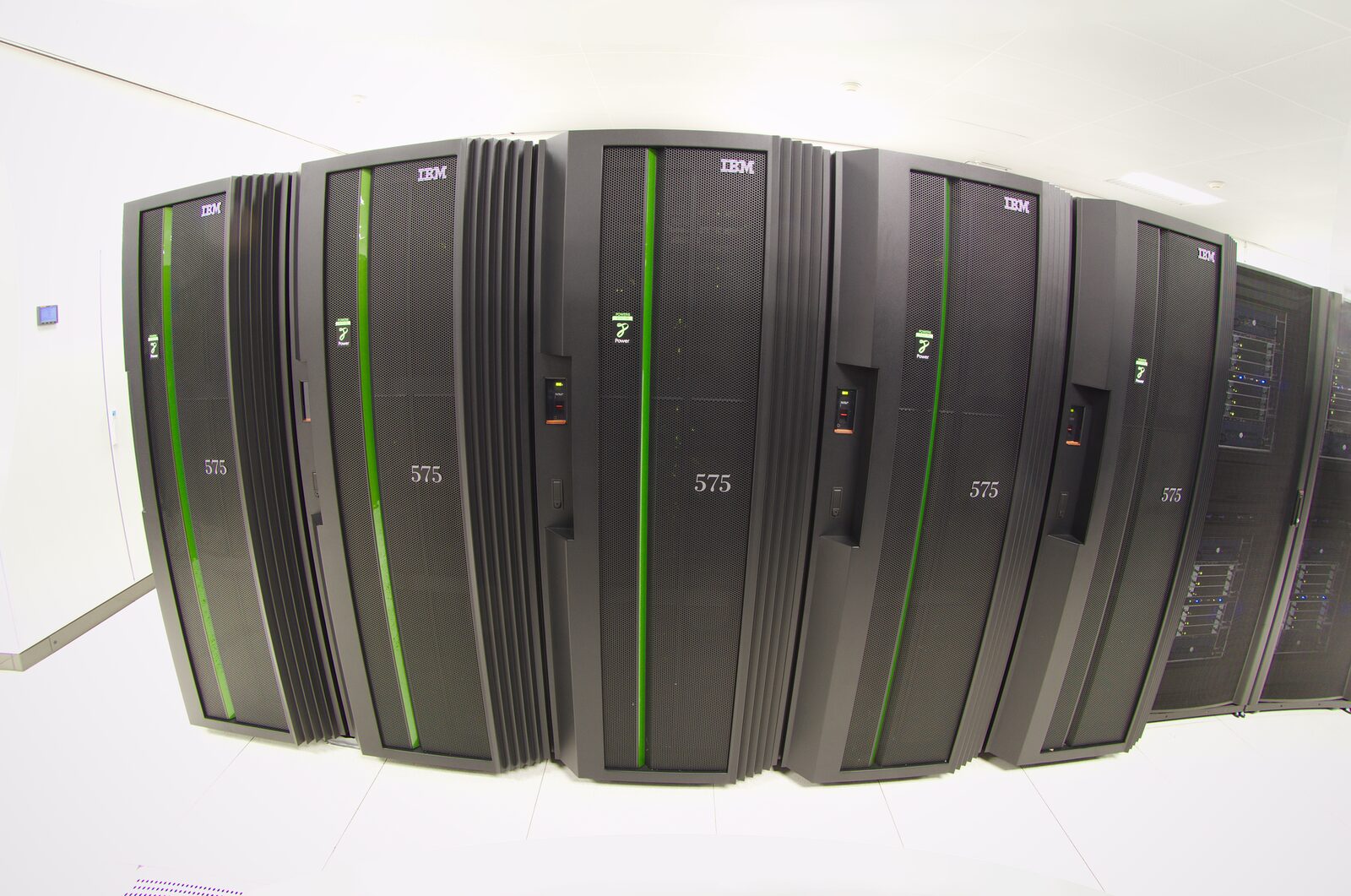
Most companies that would benefit from serious compute never consider EuroHPC, because supercomputing sounds like something for physicists. That was largely true a decade ago. It is not true now, and the access routes are more open than almost anyone realises.
The EuroHPC Joint Undertaking procures and operates European supercomputers, funds the software and skills around them, and, most usefully for companies, allocates access to them. For the right workload, that access is dramatically cheaper than commercial cloud, and for some workloads it is free.
What EuroHPC actually is
A joint undertaking between the EU, participating states and private members, funded from the Digital Europe Programme, Horizon Europe and the Connecting Europe Facility, plus national contributions.
Its work splits into three parts:
Infrastructure. Procuring and operating supercomputers across Europe, from mid-range systems to exascale-class machines, hosted at sites in various member states. Also the AI factories described in our InvestAI guide, which are AI-optimised capacity attached to these sites.
Research and innovation. Funding the software stack, applications, and increasingly European processor technology.
Skills and access. Competence centres, training, and the allocation calls through which you actually get to use the machines.
That last part is the one companies should care about and mostly do not know exists.
The access routes
Access is allocated through calls, and there are several with very different characteristics. Getting the right one matters more than anything else.
Benchmark and development access
Small allocations for testing whether your code runs and how it scales. Lightweight application, fast turnaround, small amount of compute.
This is the correct starting point for anyone who has never used these systems. It costs you an application form and it tells you the two things you need to know: does your workload run at all, and does it scale usefully.
Regular access
The main route for substantial allocations. Peer-reviewed, with calls on a regular cycle, aimed at projects with a clear scientific or technical case. Larger allocations over longer periods.
The review is genuine and the proposal needs a technical case: what you are computing, why it needs this scale, and evidence your code performs.
Extreme scale access
For projects needing very large fractions of the largest machines. Rare, heavily reviewed, and not where most companies start.
AI and industry-specific access
Newer tracks aimed explicitly at AI workloads and at industrial users, including SMEs and startups. These have lighter processes than traditional scientific allocation and are designed for organisations that are not research institutions.
If you are a company rather than a university, this is usually your route.
Access through AI factories
AI factories have their own access arrangements, generally with more support for users who are not HPC specialists. If your workload is model training or fine-tuning rather than traditional simulation, start here.
What it costs
For research and for many industrial uses, allocated compute is provided without charge, because the machines are publicly funded and the allocation process is the rationing mechanism rather than price.
There are also commercial access arrangements where a fee applies, typically for work that is directly commercial with no openness requirement. Even then, the pricing tends to compare favourably with commercial cloud for sustained large jobs, because you are not paying a margin on elastic capacity you are not using.
The real cost is not the compute. It is the engineering.
The honest part: this is not cloud
This is where expectations need setting, because it is the reason companies try EuroHPC and give up.
You do not get a VM with root. You get an allocation on a shared cluster with a job scheduler, usually Slurm. You submit jobs to a queue. They run when resources are available. Interactive work is limited.
The software environment is module-based, not container-first, though container support is increasingly available. Your dependencies may need building against site-specific libraries.
The filesystem is shared and has policies. Scratch space is purged. Home directories have quotas. Data transfer in and out needs planning, and for large datasets it needs real planning.
Networking is optimised for tightly coupled parallel jobs, not for microservices calling each other. If your workload is a distributed system rather than a parallel computation, this is the wrong environment.
Queue times are real. A large job may wait. If you need results in an hour on demand, this is not your infrastructure.
Elasticity does not exist. You have an allocation. You cannot scale up because today is busy.
What this adds up to: EuroHPC is excellent for large, scheduled, parallel or batch workloads where you can plan ahead. It is poor for interactive, elastic, on-demand or service-shaped workloads.
What workloads actually fit
Model training and fine-tuning at scale. The obvious modern case, and what the AI factories are built for.
Large-scale simulation. Computational fluid dynamics, molecular dynamics, structural analysis, climate and weather, electromagnetics. The traditional cases, and still the largest users.
Large batch inference or dataset processing. Processing a large corpus once, generating embeddings at scale, batch scoring.
Anything where you currently spend serious money on cloud GPU or CPU time on scheduled jobs. This is the commercial test. If your monthly cloud compute bill for batch work is meaningful and the jobs are plannable, do the comparison.
Anything where data cannot leave the EU. Sensitive data under sectoral rules, health data, public sector data. Compute inside the EU under EU jurisdiction changes the analysis, and it connects to the transfer questions covered in our GDPR guide.
Practical route in
Start with a benchmark allocation. Small, fast, and it answers whether this is viable before you invest.
Talk to the national competence centre. Every participating country has one. They exist specifically to help organisations that are new to HPC, they are free, and they will tell you honestly whether your workload fits.
Budget the porting work explicitly. If your team has only ever run on managed cloud, getting a workload running efficiently on an HPC allocation is a real engineering project. Not enormous, but not zero. A first attempt that runs at a fraction of achievable performance is common.
Check the AI-specific and industrial tracks first if you are a company. The traditional scientific allocation process is not designed around you.
Plan data movement early. Moving terabytes in and out is a logistics problem with its own lead time.
Where this sits strategically
EuroHPC is the foundation layer of the European compute strategy. The AI factories described in our InvestAI guide attach to it. The gigafactories extend it. The processor work under the Chips Act aims eventually at reducing the hardware dependency underneath it. And the Cloud and AI Development Act is the regulatory framework around the whole thing.
For a company, the strategic significance is smaller than the practical one. You are unlikely to care about European technological sovereignty when choosing where to run a training job. You may well care that the compute is a fraction of the price.
Where this fits
The full funding and access landscape is mapped in our EU technology funding guide. The programme that funds much of EuroHPC is covered in our Digital Europe Programme guide.
Getting help
We build data platforms, AI pipelines and compute-intensive systems for companies operating in Europe, including the work of getting a workload from a laptop or a cloud GPU onto a scheduled HPC allocation without losing a quarter to it.
If you have a compute-bound workload and want a realistic assessment of whether EuroHPC access would help and what porting it would take, write to office@c9group.dev. More about our infrastructure work on the AWS cost optimisation page.