InvestAI, AI Factories and AI Gigafactories: Europe's Compute Build-Out
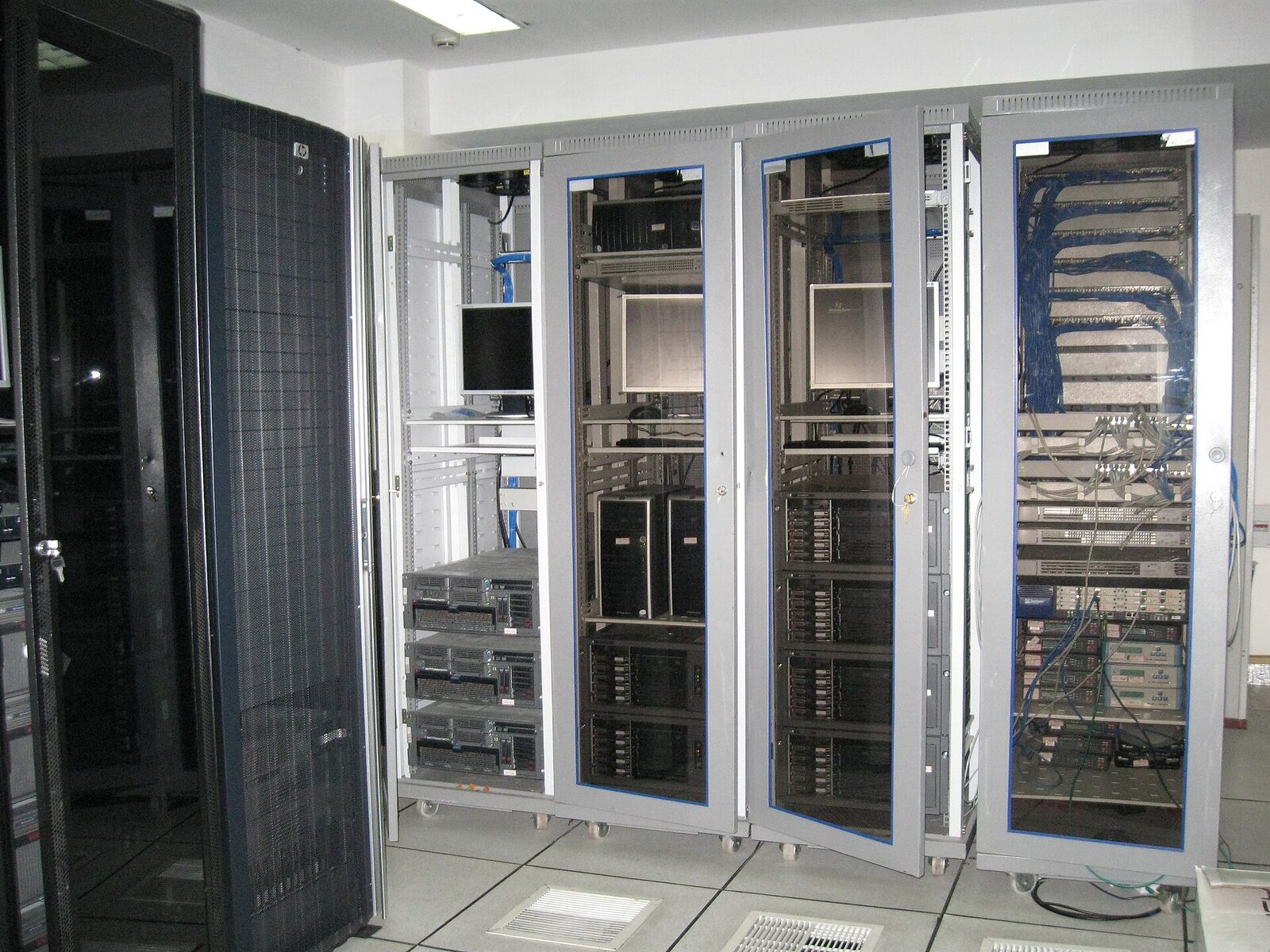
The largest single bet in current European technology policy is not a regulation. It is an attempt to build enough AI compute in Europe that European companies do not have to rent all of it from elsewhere.
InvestAI aims to mobilise €200 billion for AI investment in the EU, including a €20 billion European fund for AI gigafactories. Whether that headline number materialises is a fair question. What is already happening on the ground is more concrete and more immediately useful.
The three tiers
The confusing part is that there are several things with similar names doing different jobs. They form a rough hierarchy.
EuroHPC supercomputers
The existing base layer. European supercomputers procured and operated through the EuroHPC Joint Undertaking, some among the fastest in the world. Built for scientific computing, increasingly used for AI. Covered in our EuroHPC guide.
AI factories
AI-optimised compute attached to EuroHPC supercomputing sites, together with the services around it: data handling, model training support, expertise, and access for startups and SMEs.
The important part is the second half. An AI factory is not just GPUs. It is a facility with a mandate to make that compute usable by companies that could never operate it themselves, with support staff who help you actually run a training job.
At least 19 AI factories are planned across Europe, with a target of 13 operational.
AI gigafactories
The new and much larger tier. Facilities on a scale intended to train frontier models, with computing power roughly an order of magnitude above the AI factories.
Up to five are envisaged. The public commitment involves around €10 billion aimed at attracting at least €20 billion in private investment, with reporting in early 2026 of around €37 billion across ten candidate facilities in seven countries.
The numbers move around because they combine committed public money, expected private co-investment and national contributions, and different announcements count different things. Treat the headline totals as directional.
Why this exists
Three reasons, and it is worth being clear about them because they explain what the facilities will actually prioritise.
Capacity. Training and serving large models requires compute at a scale that did not exist in Europe. Companies wanting to train a substantial model in Europe had limited options.
Dependency. The strategic argument. Compute is infrastructure, infrastructure creates leverage, and Europe holds very little of the relevant leverage. This is the same reasoning behind the Cloud and AI Development Act.
Access asymmetry. Even where compute exists, access is concentrated. A European startup competes for capacity against buyers with vastly more purchasing power. AI factories are explicitly designed to reserve capacity for smaller players.
What this means if you are not building a data centre
Most companies reading this will never bid to operate a gigafactory. The useful question is how to use what is being built.
Access to AI factory compute
This is the practical opportunity and it is underused. AI factories exist partly to give startups, SMEs and researchers access to serious compute. Access is generally through calls and application processes rather than a credit card, and the pricing for eligible users is dramatically below commercial rates.
If you have a workload that is genuinely compute-bound, training or fine-tuning models at a scale where cloud GPU costs are painful, this is worth investigating before assuming a hyperscaler is the only option.
The tradeoffs are real. Access is not instant, the environments are HPC environments rather than managed cloud, and if your workload needs elastic on-demand capacity this is not a good fit. For scheduled large training runs it can be substantially cheaper.
The software layer is where the gap is
Here is the observation worth making. Building the hardware is a capital problem and Europe is now spending on it. Making it usable is a software problem and it is much less well funded.
HPC environments are not friendly to teams whose experience is managed cloud services. Job schedulers, module systems, shared filesystems, MPI, and queue policies are a different world from a Kubernetes cluster and an object store. The distance between a working training script on a cloud GPU and the same job running efficiently on an HPC allocation is real engineering work.
That gap is an opportunity for anyone who can bridge it, and it is a real cost for anyone planning to use these facilities without accounting for it.
Data locality changes what is possible
For companies with data that cannot easily leave the EU, whether for GDPR reasons, sectoral rules, or contractual commitments, European compute changes what is architecturally possible. Training on sensitive data in a facility inside the EU under EU jurisdiction is a different proposition from sending it elsewhere.
Health, public sector and financial services are the obvious cases, and they are also the sectors where the AI factories have specific sectoral focus areas.
How to actually get access
Find the AI factory nearest your domain, not your geography. They have specialist focuses. Some are health-oriented, some industrial, some language and multilingual AI. The right one for you may not be in your country.
Look at the EuroHPC access calls. These have several tracks including specific ones for SMEs and startups, with different sizes of allocation and different review processes. Some are lightweight.
Check whether a Digital Innovation Hub can broker it. EDIHs described in our Digital Europe Programme guide frequently have relationships with compute providers and can help SMEs navigate access.
Budget for the porting work. If your team has never run on HPC, assume a real engineering effort to get a workload running efficiently. The compute may be cheap. Getting to the point of using it is not free.
An honest assessment
Some scepticism is warranted, and it is better to hold it explicitly.
The headline numbers include a lot of hoped-for private money. €200 billion mobilised is not €200 billion committed. The public portion is real and much smaller.
Building compute does not create model capability. Europe's gap in frontier AI is not solely a compute gap. It is also talent concentration, capital markets, and the fact that the leading labs are elsewhere. Compute is necessary and not sufficient.
Timelines for large facilities are long. Data centres of this scale take years, and power availability is a genuine constraint in several candidate locations. Announced capacity and available capacity are different things.
Chips are a dependency. The accelerators in these facilities are largely not made in Europe, which is what the Chips Act is trying to address on a much longer timescale.
None of that makes the programme pointless. It makes it a long-term infrastructure play whose main near-term benefit to ordinary companies is access to compute at good prices, rather than the emergence of a European frontier lab.
What to do about it
If you train or fine-tune models at any scale, spend an afternoon investigating AI factory access. The economics can be very favourable and most companies have not looked.
If you are architecting an AI product now, put an abstraction over your model provider. It costs almost nothing and it preserves the option to move to European infrastructure later, which is the same recommendation the Cloud and AI Development Act argues for on policy grounds and commercial sense argues for anyway.
If you have compute-bound research, look at the EuroHPC access routes before assuming cloud is the answer.
Where this fits
The full funding landscape is in our EU technology funding guide. The compute infrastructure underneath this is covered in our EuroHPC guide, the chips underneath that in our Chips Act guide, and the regulation of what you build on top in our AI Act transparency guide.
Getting help
We build AI features and data platforms for companies operating in Europe, including the unglamorous parts: getting training workloads running efficiently, abstracting model providers so switching is possible, and building the data pipelines that make compute access useful rather than theoretical.
If you are considering European compute for a workload and want a realistic view of the porting effort, write to office@c9group.dev. More about our work on the AWS cost optimisation page and the EU market entry page.