Hetzner Cloud in 2026: a review for teams leaving AWS or Azure
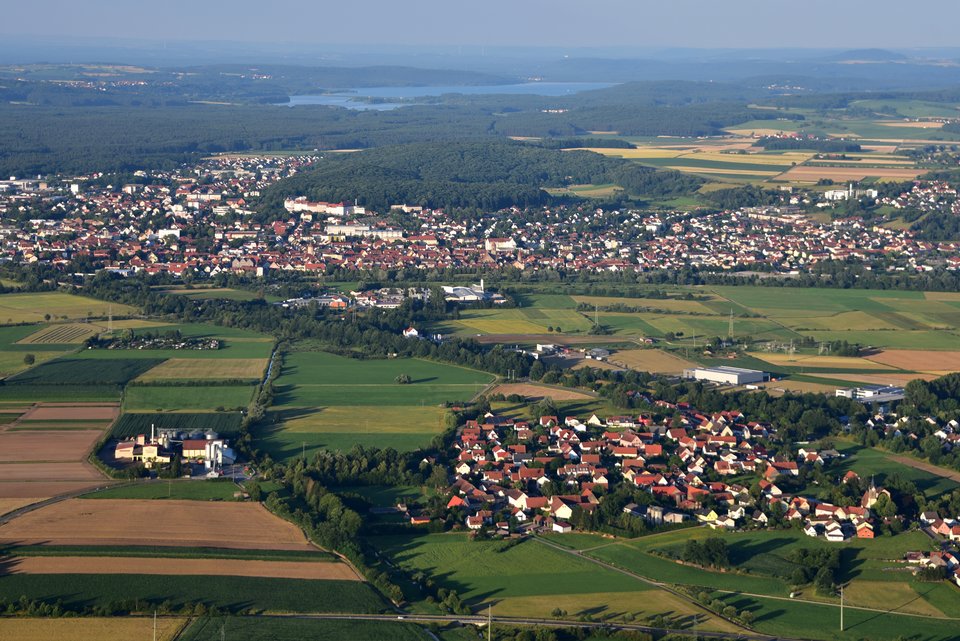
Hetzner Online GmbH is a privately held German hosting company, founded in 1997 and based in Gunzenhausen. It sells cloud servers in Germany, Finland, the US and Singapore, and dedicated servers from its own data centre parks in Germany and Finland.
Bandwidth is close to free, and dedicated and GPU servers sit next to the cloud under one German contract. But Hetzner sells compute, storage, network and DNS and little more: there is no managed database, no managed Kubernetes and no availability zone. And 2026 was hard on its customers. New CPX and CCX cloud servers cost 3.0 to 3.6 times their March prices, and since 26 June the creation of cloud servers has been restricted for new customers and for some existing ones.
We checked prices, terms and status on 15 and 16 October 2026. This article is one of a series comparing 24 European providers with AWS and Azure; the overview puts them side by side. Everything here comes from Hetzner's documentation, terms, price data, status page and legal notice, and from user reports, each checked at its source; we opened no account.
At a glance
| Hetzner | |
|---|---|
| Headquarters and control | Gunzenhausen, Germany. Hetzner Online GmbH, privately held; no outside investor found |
| Regions and zones | Cloud in Falkenstein, Nuremberg, Helsinki, Ashburn, Hillsboro and Singapore. No availability zones. Dedicated servers in the three European locations only |
| Workload A (starter) | EUR 26.48 a month on a CPX22 in Nuremberg (EUR 12.48 on the exact-fit CX23, which could not be ordered) |
| Workload B (production) | EUR 241.11 with shared vCPU, EUR 290.61 with dedicated vCPU. Leaves out the managed PostgreSQL and the Kubernetes control plane: Hetzner sells neither |
| Egress | At least 20 TB a month included per EU cloud server, then EUR 1.00 per TB. Less in the US (from 1 TB) and Singapore (from 0.5 TB) |
| Compute SLA | 99.9% a month per cloud server, since 16 March 2026; cloud credits only, capped at that server's monthly invoice |
| Included support | The only tier: cloud tickets 24/7, phone on weekdays, no published response times |
| Who can sign up | People and businesses, after a risk check that can demand ID or a prepayment. Server creation restricted since 26 June 2026 |
What you can build
Hetzner has two product lines with separate consoles and APIs: Hetzner Cloud for virtual servers and the services around them, and Robot for dedicated servers, the Server Auction of used hardware and colocation. Robot exists only in the three European locations.
| What you need | Hetzner | AWS | Azure |
|---|---|---|---|
| VMs, shared vCPU | CX (Intel or AMD), CAX (Arm), CPX (AMD). CX and CAX "not available" to order on 15 October 2026 | EC2 burstable | B-series |
| VMs, dedicated vCPU | CCX (AMD) | EC2 general purpose | D-series |
| Bare metal | Dedicated servers and the Server Auction, EU only | EC2 bare metal | BareMetal Infrastructure |
| GPU | Dedicated servers with NVIDIA RTX PRO 4000 or 6000 Blackwell; no cloud GPU | EC2 P and G | NC and ND series |
| Block storage | Volumes, 10 GB to 10 TB, each block on three physical servers; no volume snapshots or backups | EBS | Managed Disks |
| Object storage | S3-compatible, EU locations only, partial S3 API | S3 | Blob Storage |
| File storage | Storage Box (SFTP, SMB, WebDAV and others; NFS not listed) | EFS | Azure Files |
| Managed databases | None (no PostgreSQL, MySQL, Redis, MongoDB, Kafka or OpenSearch) | RDS and others | Azure Database and others |
| Managed Kubernetes | None. Official cloud controller manager and CSI driver for clusters you run | EKS | AKS |
| Registry, functions, containers, queues, CDN, key management, logging | None. Object Storage encrypts only with customer-provided keys (SSE-C) | ECR, Lambda, Fargate, SQS, CloudFront, KMS, CloudWatch | ACR, Functions, Container Apps, Service Bus, Front Door, Key Vault, Monitor |
| Networks and firewalls | Private networks per network zone, linkable to dedicated servers over vSwitch; stateful firewalls free | VPC, security groups | VNet, NSG |
| Load balancers | TCP, HTTP and HTTPS (no UDP), managed certificates, cloud and dedicated targets | ELB | Load Balancer |
| DNS | Free, no DNSSEC | Route 53 | Azure DNS |
| DDoS protection | Automatic and free on all products | Shield Standard | DDoS Network Protection (paid) |
Above the infrastructure layer, everything is yours to run or to buy from someone else. Access control stops at project roles and project API tokens, with no per-resource policies. Object Storage has versioning and Object Lock but no replication, event notifications, website hosting or tagging.
The tooling is good. The Cloud API has a published OpenAPI specification and allows 3,600 requests an hour per project. Hetzner maintains the Terraform provider (partner tier, about 20.5 million downloads), the CLI, Go and Python SDKs, and the Kubernetes controller manager and CSI driver; the provider, CLI, controller manager and driver all had releases between 5 and 12 October 2026. The API does change under you: Hetzner removes fields and endpoints with 1 to 6.5 months' notice.
What it costs
All prices are list prices in EUR, VAT excluded, from the price data Hetzner's own website loads. Cloud servers are billed per started hour up to a monthly cap, and for every plan priced here a full month pays the cap, whether the server is powered on or off. We priced Nuremberg because Hetzner's plan pages list it, and not Falkenstein, as orderable for CPX22 and larger and for every CCX plan; prices are the same in all three EU locations.
Workload A: one small server
Workload A is one VM with 2 vCPU and 4 GB, at least 40 GB of disk, one IPv4 address, 1 TB of egress and 100 GB of object storage. It costs EUR 26.48 a month: a CPX22 (2 shared AMD vCPU, 4 GB, 80 GB NVMe) at EUR 19.49, a Primary IPv4 at EUR 0.50 and the Object Storage base price of EUR 6.49, which includes 1 TB of storage. The egress fits inside the server's 20 TB. The exact fit, a CX23 at EUR 5.49, would make it EUR 12.48, but Hetzner listed it as not available on 15 October.
AWS charges EUR 112.37 for the same workload and Azure EUR 116.15. Most of the difference is egress, which both bill beyond the first 100 GB a month: EUR 80.30 per TB on AWS, EUR 77.62 on Azure.
Workload B: a small production system
Workload B is three VMs of 4 vCPU and 16 GB, each with a public IPv4; 300 GB of block storage; a load balancer; a highly available PostgreSQL; 1 TB of object storage with 1 million PUT and 10 million GET requests; a Kubernetes control plane; and 2 TB of egress.
| Line | Shared vCPU | Dedicated vCPU |
|---|---|---|
| 3 VMs | CPX42 (8 vCPU, 16 GB): 3 x 69.49 = 208.47 | CCX23 (4 vCPU, 16 GB): 3 x 85.99 = 257.97 |
| 3 Primary IPv4 | 1.50 | 1.50 |
| 300 GB of Volumes | 17.16 | 17.16 |
| Load balancer LB11 with its IPv4 | 7.49 | 7.49 |
| 1 TB of Object Storage, requests included | 6.49 | 6.49 |
| 2 TB of egress | 0.00 | 0.00 |
| Managed PostgreSQL, highly available | not sold | not sold |
| Kubernetes control plane | not sold | not sold |
| Total, EUR a month | 241.11 | 290.61 |
No shared plan with 4 vCPU and 16 GB can be ordered, so the shared column uses the next larger, the 8 vCPU CPX42. Neither total includes the database or the control plane, which your team would run on extra servers: a CCX13 (2 dedicated vCPU, 8 GB, the database size here) is EUR 42.99 a month, and a primary with a standby needs two. AWS (EUR 1,082.61) and Azure (EUR 1,091.88) include both; take them out and those totals are still about three times Hetzner's shared-vCPU one.
Egress, IP addresses and storage
Each EU cloud server includes at least 20 TB of egress a month (up to 60 TB on a CCX63), then EUR 1.00 per TB; ingress and internal traffic are free. Alerts at 75% and 100% of the allowance do not stop the traffic, and we found no general spending cap. US servers include from 1 TB, Singapore servers from 0.5 TB with each extra TB at EUR 7.40, and servers cost more there (a CCX13 is EUR 43.49 in the US, EUR 53.99 in Singapore).
A Primary IPv4 is EUR 0.50 a month, IPv6 is free, and an IPv4 on a dedicated server is EUR 1.70. Volumes are EUR 0.0572 per GB a month and backups 20% of the server price. Object Storage requests are free, storage beyond the included 1 TB is about EUR 6.35 per TB a month, and every object is billed as at least 64 kB.
You choose EUR or USD at signup and cannot change it later. Billing is monthly in arrears; there is no free tier, trial credit or discount for any group.
Dedicated and GPU servers
Dedicated servers start at EUR 57.30 a month for limited-stock types, an AX42-1 is EUR 97.30 plus EUR 49 setup, and used hardware from the Server Auction starts at EUR 68.70. GPUs come only as dedicated servers: the GEX45 (RTX PRO 4000 Blackwell, 24 GB) at EUR 212.30 a month plus EUR 209.00 setup, the GEX63 (RTX PRO 6000 Blackwell Max-Q, 96 GB) at EUR 997.30 plus EUR 999.00, and the GEX131 from EUR 1,497.30 plus EUR 1,499.00. There is no H100, H200, B200, L40S or L4. Hetzner gives delivery as usually 10 to 12 workdays for a GEX131 and several weeks for a GEX63-1 in Finland.
Price changes since late 2024
| Date | What changed |
|---|---|
| 1 December 2024 (new servers), 1 February 2025 (existing) | US cloud servers and load balancers: higher prices and far less included traffic; a CPX11 went from EUR 3.85 to 4.49 and from 20 TB to 1 TB. Known from Hetzner's email as customers posted it, not from a Hetzner web page |
| 2 February and 29 April 2026 | Setup fees for dedicated servers raised twice, by amounts Hetzner did not state |
| 1 April 2026 (announced 23 February) | All products, existing servers included. Cloud servers up about 30 to 37% (CPX22 5.99 to 7.99, CCX23 23.99 to 31.49), Volumes 0.044 to 0.0572 per GB, Object Storage base 4.99 to 6.49 |
| 15 June 2026 (announced 27 May) | New orders and rescales only. CX23 3.99 to 5.49 (+38%), CPX22 7.99 to 19.49 (+144%), CPX42 25.49 to 69.49 (+173%), CCX23 31.49 to 85.99 (+173%), US CPX11 5.99 to 17.49 (+192%). Most setup fees cut; storage, IP addresses and load balancers unchanged |
| After 15 June 2026 | GEX131 at EUR 1,497.30 a month, against 1,197.30 in the June table. No announcement found |
Hetzner gives the purchase price of RAM and NVMe as the reason for every 2026 round. It has not said why the CPX and CCX lines rose about three times as much as CX and CAX. A server keeps the price it was created at until it is rescaled, so two identical servers in one account can cost different amounts.
Reliability
What a zone is here
Hetzner has no availability zones. A location is one data centre park in one city; a network zone is a group of locations that can share a private network. One private network can span Falkenstein, Nuremberg and Helsinki, but those are three cities in two countries, so in our reading a multi-location design here is closer to AWS multi-region than to multi-AZ. We have no measured latency between the parks. The US and Singapore have one location per network zone and nowhere inside it to fail over to. AWS and Azure each have three zones in Frankfurt, in separate buildings within 100 km.
Inside a location, a spread placement group puts up to 10 servers on different physical hosts. Hetzner says nothing about rack, power or network separation. Its parks consist of separate buildings, which the status page names (FSN1-DC1 to at least FSN1-DC16), but a cloud customer cannot choose one. With no managed database there is no standby to describe: a replica you run goes on another host, or in another city.
On 15 October the plan pages listed CPX22 and larger, and every CCX plan, only in Nuremberg and Helsinki. The price data still carried Falkenstein prices for them, so we read this as stock running out rather than a withdrawal.
The SLA
The cloud SLA dates from 16 March 2026 and covers cloud servers only: 99.9% monthly availability per server, with "commercially reasonable efforts". The credit is the downtime beyond the threshold, in hours, times the hourly rate; Hetzner's own example, 185 minutes down in a 30-day month, pays EUR 0.87. It is paid as non-refundable cloud credit, capped at 100% of that server's monthly invoice, and "No alternative remedies are available." The customer claims within 14 calendar days after the month ends.
Excluded are maintenance announced at least 24 hours ahead, rescales, "required live migrations", DDoS and hacker attacks, and third-party network problems; at least two 2026 outages were attributed to attacks. We found no SLA for Volumes, load balancers, networks or Object Storage. Dedicated servers get a 99.9% annual network target with no credits, and the general terms cap liability for ordinary negligence at the product's monthly price.
AWS promises 99.99% across two or more zones and 99.5% for a single instance, Azure 99.99% across zones and 99.9% for a single VM on Premium SSD; AWS takes claims until the end of the second billing cycle, Azure within 60 days.
Status page and incidents
The status page shows active items and about the last seven days of resolved incidents, with no archive. Older entries are reachable only by direct URL. We found no postmortems beyond the one-line causes on the entries, and users report outages that never reached the page (below).
| Date | What happened |
|---|---|
| 18 to 29 November 2024 | C-LION1 subsea cable cut: 11 days of higher latency between Frankfurt and Helsinki |
| January to July 2025 | Mainboard design error on dedicated AX42, AX52 and AX102: every board replaced, 30 to 40 minutes down per server, no choice of date |
| 21 to 22 December 2025 | Cloud API and Console unavailable for about 12 hours over two entries; Hetzner later wrote "We regret the delayed communication" |
| 25 February 2026 | A DDoS mitigation "blocked too much traffic": UDP forwarding and the Cloud API and Console disrupted for 2.5 hours |
| 2 March 2026 | Singapore: both redundant leaf switches updated at once, volumes unreachable for about 1.75 hours |
| Since 26 June 2026 | Creation of cloud servers restricted for new customers and randomly selected existing ones, who also cannot rescale or move servers in that location; open for 16 weeks on 16 October |
| Since 9 September 2026 | Object Storage in Helsinki partly degraded; root cause "not entirely clear" on 21 September |
| 8 to 9 and 13 to 14 October 2026 | Recursive DNS in all three EU locations (about 21 hours), then cloud IPv6 routing (about 21.5 hours) |
| 14 October 2026 | Cloud API, Hetzner API and Console down for 1.5 hours during an attack |
Support
There is one support tier, included in the price; we found no paid option. For cloud products, Hetzner answers tickets "around the clock (24/7/365)"; orders, invoices and account questions are handled Monday to Friday, 8:00 to 18:00 CET, and the phone line keeps the same weekday hours. Data centre lines that answer at any hour are only for dedicated-server customers with a telephone password. Support is in German and English.
Hetzner publishes no response times for any severity, and it supports the infrastructure only. Cloud servers are "unmanaged products", Windows on cloud servers gets no support, and for dedicated servers Hetzner does not support "any software or operating systems". Even so, its included tier takes technical tickets around the clock, which AWS's free Basic tier does not: Basic customers cannot open technical cases. Azure's Basic tier sets no response targets either.
Getting an account
Anyone can sign up, as a person or a business, with an email address, contact details and a billing address. Every new account goes through a risk assessment that uses the registration data, technical characteristics and an external service provider Hetzner does not name; a Hetzner employee makes the final decision. A flagged account must send a copy of a government ID, checked by Hetzner staff or by iDenfy (which keeps the data for two months), or make a credit-card prepayment that is refunded only when the account is closed. Hetzner's official Hacker News account has also offered a EUR 20 PayPal payment instead.
Large or expensive first orders are a reason for rejection, and new customers are told to start small. The terms let Hetzner reject an order within 5 working days, and if verification fails it gives no details "for security reasons".
Default quotas are 20 shared vCPUs and 8 dedicated vCPUs per account. Raising them is a manual request, "only possible if you have been with us for a month and paid your first invoice"; the same applies to opening SMTP ports 25 and 465, blocked by default. So workload A fits on day one and workload B does not: three CCX23 need 12 dedicated vCPUs against 8, three CPX42 need 24 shared vCPUs against 20. AWS's documented default for standard instances is 5 vCPUs, so a new AWS account has to ask too, but it can ask on day one.
Then there is capacity. Since 26 June 2026 Hetzner has restricted the creation of cloud servers "for both new customers and some of our existing customers", the existing ones chosen "at random", citing "continuing high demand and the limited availability of required hardware components". A new account can pass verification and still be unable to create a server in a given location. The restriction was still open on 16 October 2026.
Compliance and data protection
| Certificate or audit | What it covers | Seen? |
|---|---|---|
| ISO/IEC 27001:2022 | Certified by SOCOTEC, valid 27 September 2025 to 26 September 2028, for "all hosting services and the data centers" at Nuremberg, Falkenstein and Tuusula. The US and Singapore sites are not listed | Certificate seen |
| BSI C5:2020 Type 2 | Unqualified attestation by WP Koehler, report dated 17 November 2025, covering the cloud (servers, block storage, load balancers, firewalls, Floating IPs), dedicated and managed servers, storage products and colocation. Locations and audit period not stated | Hetzner's one-page summary seen; the auditor's report is not public |
| PCI DSS | A seal for card entry in the customer account; Hetzner says it stores no card data | Not opened |
| KRITIS (§8a BSIG) | Hetzner says it is a critical-services operator audited under §8a | Claimed only |
| TOM audit by TÜV Rheinland | Protocol for customers who have concluded the DPA | Not seen |
| ISO 27017, ISO 27018, SOC 2, SecNumCloud, HDS, TISAX | None found |
Hetzner calls its C5 result a certification; BSI issues no C5 certificates, and C5 is an attestation by an auditor the provider hires (Myra Security).
The data processing agreement is concluded online by ticking a box; Hetzner signs no individual DPAs. The sub-processor list (version 1.0 of 6 August 2024) names Hetzner's Finnish, US and Singapore subsidiaries and the colocation operators NTT and QTS, and states that server data stays in the EU when you choose an EU location, with support delivered from the EU for every location.
Customer master, contract and billing data are processed "exclusively within the EU", whatever location you choose. Data you store on a US or Singapore server goes to that country, on the basis, Hetzner says, of "your express consent, which you gave when selecting the product location"; Standard Contractual Clauses are not mentioned. Hetzner says it accepts requests and court orders in Germany only from German authorities and courts, and in Finland only from Finnish ones, and notes that those authorities may pass data on under international agreements.
Who controls it
Hetzner Online GmbH is registered at the Amtsgericht Ansbach (HRB 6089) and managed by Martin Hetzner, Stephan Konvickova and Günther Müller. It has no stock listing, and we found no outside investor and no non-European parent. A third-party register aggregator names Martin Hetzner as a shareholder; we did not see a register extract. Hetzner's official Hacker News account wrote in December 2024: "We are a privately owned company, and do not have shareholders". Given the aggregator's entry, we read that as no outside investors.
Hetzner Online GmbH is the contracting party for every location; Hetzner Finland Oy, Hetzner US LLC (New York) and Hetzner Singapore Pte. Ltd. do the local work. The parks in Falkenstein, Nuremberg and Tuusula are Hetzner's own; in Ashburn, Hillsboro and Singapore it runs its own servers in buildings operated by NTT and QTS. The software is its own too: KVM with custom-built tooling and an in-house network controller, not OpenStack.
Leaving
Moving data out is cheap. Ten terabytes out of one EU cloud server costs nothing extra; out of Object Storage it costs EUR 9.00, because 1 TB is included and the rest is EUR 1.00 per TB. The US and Singapore allowances are far smaller, as above.
Disks are harder. The API can take a snapshot but has no endpoint to download or upload an image. Getting a disk out means booting the rescue system and copying it with dd over SSH, as one user's write-up describes; a comment from June 2025 confirms snapshots still cannot be downloaded. Object Storage copies out fine with GET, PUT and LIST, but anything built on S3 events or replication has to be rebuilt.
Kubernetes on Hetzner is whatever you install (upstream Kubernetes, k3s or Talos) plus Hetzner's controller manager and CSI driver, so the workloads move easily. The lock-in points are the firewall, network and load balancer definitions written for the hcloud Terraform provider, DNS zones (without DNSSEC), and any coupling of cloud and dedicated servers over vSwitch. None of them hold data.
Cloud resources stop billing when you delete them. The general terms (version 2.0.0 of 27 October 2021) let either side terminate with 30 days' notice to the end of the month, and say nothing about what happens to your data after termination. We did not verify the cancellation terms for dedicated servers.
What users report
Each theme below rests on at least two independent reports, or on one report that a Hetzner document confirms. They are what users say, not what we measured.
- Price. Users report much lower bills than on DigitalOcean or AWS for the same compute, especially on dedicated servers (a DigitalOcean migration, March 2026; "almost absurdly good compared to AWS", February 2026). Both predate the increases that matter: the AX162-R in the first was EUR 207.30 before 1 April 2026 and EUR 242.30 after it, and today's AX162-1 is EUR 612.30.
- Support. Users report competent, direct engineers once a ticket reaches them, and response times from under an hour to a full business day (about 45 minutes, "blunt", November 2024; hours to "an entire business day", May 2025; "first class, every single time", February 2026).
- Identity checks. Users report being asked for ID, an iDenfy video selfie or a prepayment, and some went elsewhere (video face scan, May 2024; passport and webcam check, went to Scaleway, May 2026). Hetzner's fraud prevention FAQ describes the same checks.
- Status page. Users report outages that never appeared there, or that were marked fixed while still broken (Storage Box outages "never reflected on their status page", May 2025; an API outage reported as fixed while still failing, December 2025).
- Object Storage. Users report errors, timeouts and slow requests ("completely unreliable (errors, slowness, etc.)", April 2026; "constant timeouts for object creation and updates", April 2026).
- Stock. A user reports cheap cloud plans "very often out-of-stock" for months before the formal restriction (June 2026), which the 26 June status entry and the "not available" labels on CX and CAX plans bear out.
- The June 2026 round. Users report that it hit new orders with no transition period and stopped planned migrations ("How do you double prices ... with no transition period?"; was planning to migrate for the AX162 pricing; both June 2026).
- Abuse warnings. Users report network-scan warnings caused by software defaults, notably IPFS probing private address ranges (kubo issue 10327, January 2024; threatened with cancellation for running the IPFS daemon, November 2025). Hetzner's guideline on locked servers names network scans as a reason to lock one.
Not everyone has had trouble: one user with hundreds of cloud machines reports never seeing such problems, and another calls the dedicated servers "excellent" for years when designed for redundancy.
Who it suits, and who should look elsewhere
Hetzner suits teams with Linux and Kubernetes operations skills who run stateless services or self-managed stacks in the EU, bandwidth-heavy workloads, and anyone who wants dedicated or GPU servers next to cloud VMs under one European contract. If your team already runs its own PostgreSQL and Kubernetes, the gap to AWS and Azure pays for the extra servers, even at 2026 prices.
Look elsewhere if you need managed databases or managed Kubernetes, high availability across zones in one region, published support response times, capacity you can count on for autoscaling, cheap egress in the US or Asia, or a signup that never asks for ID. And if you plan to move, check on the day that you can create the servers you need: the capacity restriction was still open on 16 October 2026.
Sources
Checked on 15 and 16 October 2026.
Pricing
- Cost-Optimized, Regular Performance and General Purpose plans, and the cloud overview
- Price API and Server Auction prices
- Price adjustment tables, June 2026 and the archived April 2026 tables
- Statements on the April 2026 and June 2026 adjustments, the FAQ on them, and the setup fee statements of February and April 2026
- IP address pricing, cloud billing FAQ, payment overview and pricing structure
- Object Storage, AX dedicated servers, GPU servers and order processing times
Terms and SLA
- Cloud and vServer service agreement and the cloud SLA page
- Terms and Conditions, version 2.0.0 and privacy policy
- Data protection at Hetzner and the sub-processor list
Documentation
- Locations, placement groups, Volumes, load balancers, servers, servers FAQ and cloud FAQ
- Cloud API reference, OpenAPI specification and changelog
- Object Storage overview, supported S3 actions and Storage Box
- Data centres, DDoS protection and DNS
- Terraform provider, CLI, cloud controller manager and CSI driver
- Account getting started, fraud prevention FAQ and guideline on locked servers
- Support, support opening hours and technical and organisational measures
- Certificates, certification page, ISO 27001 certificate and BSI C5 summary
- The Hetzner Cloud network stack (Hetzner blog, 8 October 2026)
Status and incidents
- Status page and the incident entries linked in the table above
Company and ownership
- Legal notice and about us
- Hetzner's official account on Hacker News, December 2024
- Secondary: companyhouse.de (register aggregator) and Myra Security on C5 attestations
User reports
- Write-ups: DigitalOcean to Hetzner migration (March 2026), Made in EU: it was harder than I thought (February 2026), backing up Hetzner snapshots locally (July 2023, comments to 2025)
- GitHub: kubo issue 10327
- Hacker News: 40304496, 42279064, 44038591, 44039063, 44039688, 44040333, 45816645, 46055525 (Hetzner), 46350995, 46353221 (Hetzner), 47094507, 47711677, 47738071, 48125822, 48541486, 48541726, 48542338
Data & Cloud
New guides and rule changes by email
When a rule changes, a deadline moves or we publish a new guide, we send it by email.